
10 Signs Your Business Needs a Website Redesign (and What to Do About It)
Is your website costing you customers? Spot the 10 signs your business needs a website redesign, what a redesign should fix, and how to decide. Free audit.

Your website works around the clock. It greets every visitor, answers their first questions, and decides in a few seconds whether they contact you or go back to Google and click on a competitor. When it does that job well, it quietly brings in customers. When it doesn’t, it costs you business you never see.
The hard part is that an underperforming website rarely announces itself. It just stops bringing in calls, forms, and sales the way it used to. So the real question isn’t “does my website look old?” It’s “is my website still doing its job?” Here are ten clear signs your business needs a website redesign, and what to do about each one.
10 signs it’s time for a website redesign
1. Your website is slow to load
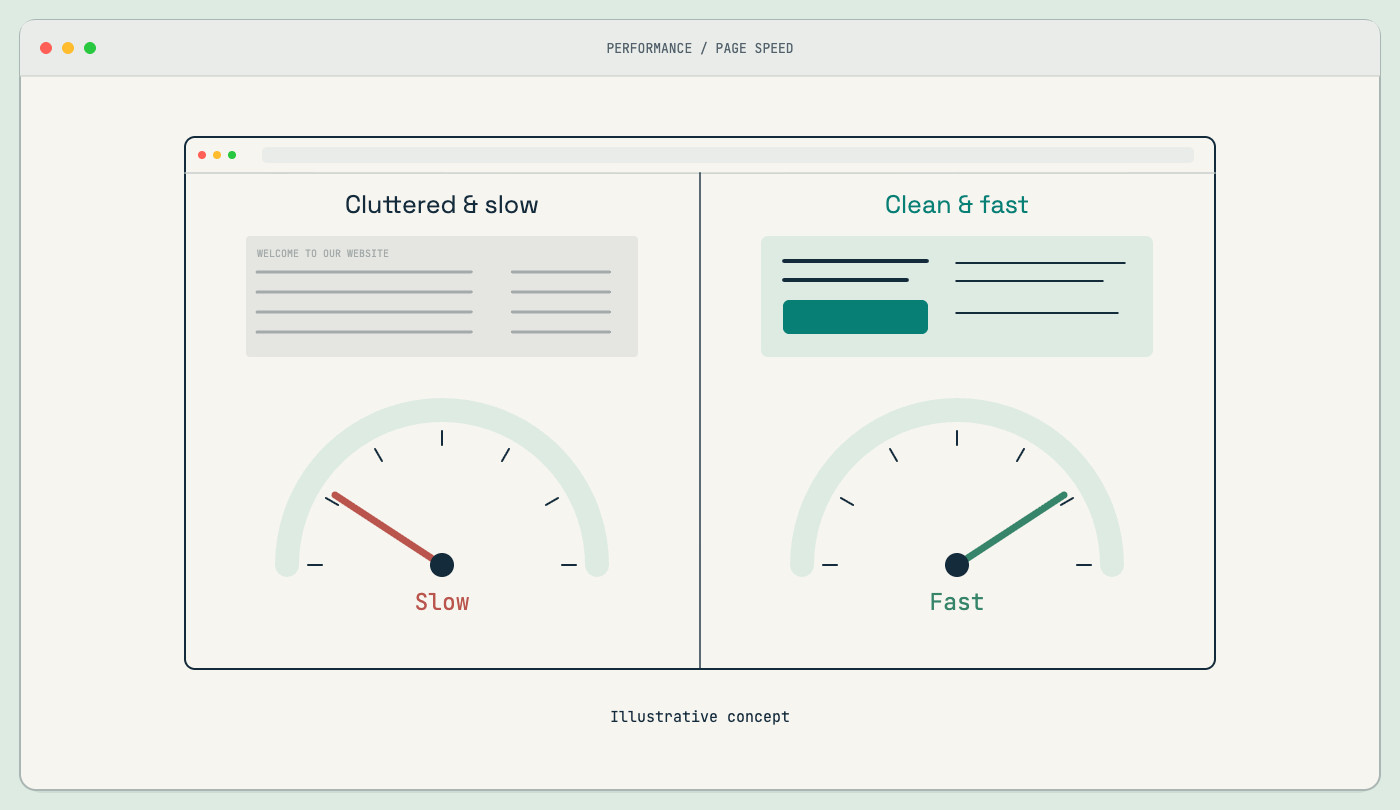
Speed is the first impression you can’t talk your way out of. Google’s own research found that as page load time goes from one second to three seconds, the chance of a visitor leaving increases by 32%. Slow sites also struggle in search, because page experience is part of how Google ranks pages.
Run your homepage through Google PageSpeed Insights on mobile. If the score is in the red, heavy images, bloated themes, and too many plugins are usually to blame. Sometimes those can be fixed. Often, the cleaner answer is a rebuild on a lean, well-coded foundation.
2. It’s hard to use on a phone
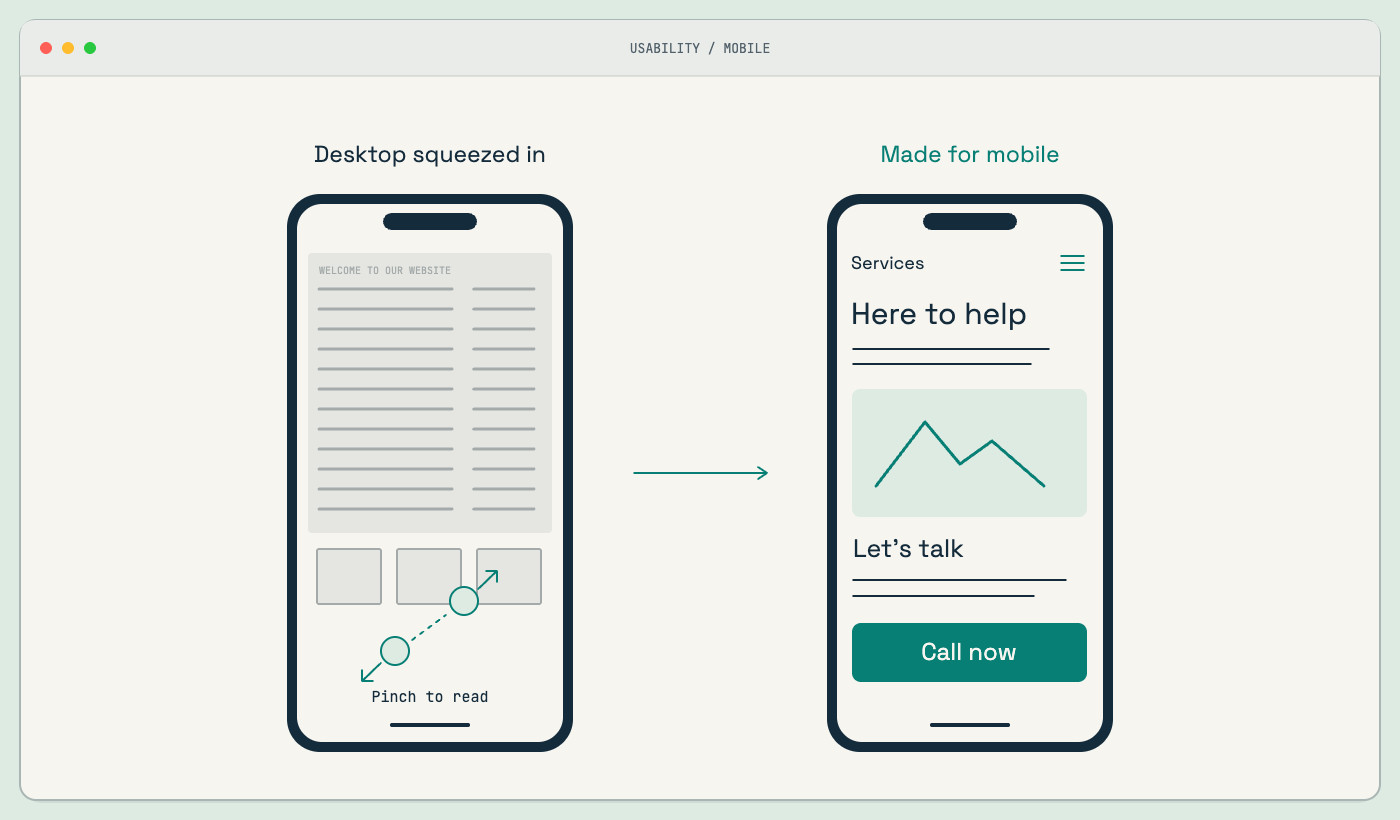
Most of your visitors are probably on their phones, and Google indexes the mobile version of your site first. If people have to pinch, zoom, or hunt for tiny buttons, they won’t stay. A mobile-friendly website isn’t a smaller copy of the desktop one. It’s designed for thumbs first: readable text, tap-friendly buttons, and a phone number that calls you in one tap.
3. Visitors land and leave
Open Google Analytics 4 and look at engagement rate and average engagement time for your top pages. If people arrive and leave within seconds, something is wrong: the page is slow, confusing, or doesn’t match what they searched for. A redesign built around what your customers actually want to know keeps them reading and moving toward contact.
4. It doesn’t bring in leads or sales
Traffic is only useful if it turns into inquiries. If your contact form is buried, your phone number is hard to find, or every page ends without telling the visitor what to do next, you’re leaving money on the table. Good web design guides people toward one clear action on every page, whether that’s booking, calling, or requesting a quote.
5. You can’t be found on Google
If you search for your main service and your city and don’t appear on page one, your website may be working against you. Pages that don’t clearly describe your services or locations, missing headings, thin content, and technical issues all make it harder for search engines to understand your site. A redesign is the right time to fix that foundation so your SEO has something solid to build on.
6. It no longer matches your brand
Businesses grow and change. If you’ve updated your logo, your services, or your pricing, and your website still shows the old version of you, visitors get mixed signals. Your site should look and sound like the business you are today, with the same colors, fonts, and voice people see everywhere else you show up. That’s where branding and identity work pays off.
7. You can’t update it yourself
If changing a price, adding a team member, or posting an announcement means emailing a developer and waiting a week, your website is slowing you down. A well-built WordPress website should let your team edit text, swap images, and publish posts without breaking the layout.
8. It shows security warnings or keeps breaking
A “Not secure” label in the browser, outdated plugins, strange redirects, or features that break after every update are serious red flags. They scare visitors away and can put customer data at risk. Old themes and abandoned plugins are a common cause. A redesign gives you a clean base, and regular website maintenance keeps updates, backups, and routine checks from slipping.
9. Your competitors look more credible than you
Look at the top three businesses that show up when your customers search. If their websites look sharper, load faster, and explain their services more clearly, you’re losing the comparison before anyone picks up the phone. People judge trust quickly, and your website is often the first thing they judge.
10. Your business has outgrown your website
Maybe you now offer online booking, sell products, serve new locations, or need pages for new services. Stacking new features onto an old site usually creates a slow, patchwork experience. If you’re ready to sell online, a purpose-built ecommerce store will serve you far better than a bolted-on shop page. We build stores on WooCommerce and Shopify.
Website redesign or refresh: how to decide
Not every problem needs a full rebuild. Use this as a rule of thumb:
- One to three signs: a focused improvement may be enough, such as speed fixes, clearer calls to action, or updated content and images.
- Four or more signs: the problems are usually connected, and a full website redesign often costs less over time than patching issue after issue.
- Security or speed problems caused by the platform itself: rebuild. Fixing an unstable foundation rarely lasts.
Not sure where you land? Our free website audit reviews your page clarity, navigation, mobile usability, and inquiry journey, so you can see whether a refresh or a redesign makes more sense.
What a good website redesign should include
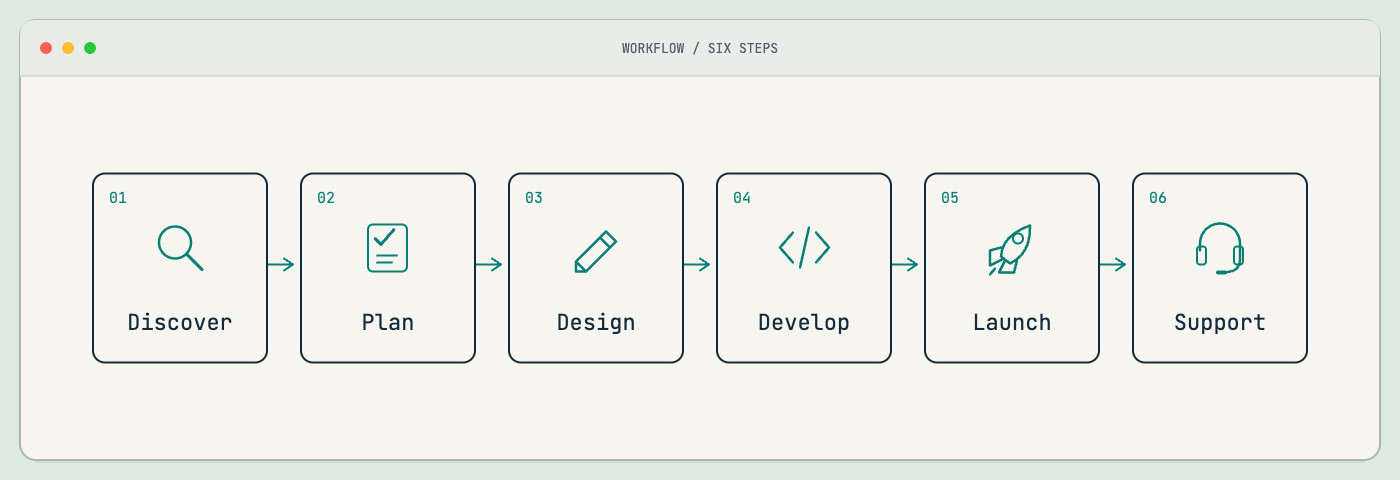
A redesign should do more than change how your site looks. At Firstrive, every project follows the same six steps:
- Discover. We learn about your business, your customers, and what your current site isn’t doing for you.
- Plan. We agree on the site structure, the pages you need, and a clear scope before any design starts.
- Design. You review wireframes and visual designs built around your brand, including mobile layouts, before anything is built.
- Develop. We build the site, usually on WordPress, with forms, integrations, content migration, and technical checks.
- Launch. We take the new site live carefully and hand it over so your team knows how to manage it.
- Support. We stay on hand for updates, fixes, and improvements as your business grows.
One more thing matters a lot: protecting the search visibility you already have. Before launch, a careful redesign keeps or redirects your existing URLs with 301 redirects, carries over the content that already ranks, and checks that nothing important goes missing. Skip this step and a beautiful new site can lose traffic overnight.
Frequently asked questions
How often should a business redesign its website?
There’s no fixed rule, but many businesses review their website every few years, or sooner when their services, brand, or goals change. Let results guide you: if your site stops bringing in leads, it’s time to look at it, whatever its age.
Will a website redesign hurt my SEO?
It can if it’s done carelessly. A well-planned redesign protects your existing visibility with 301 redirects and keeps your best-performing content. Faster pages and a clearer structure also give search engines a better site to understand, though no one can guarantee specific rankings.
How long does a website redesign take?
It depends on the size of your site, the features you need, and how quickly content is ready. A small service-business site takes far less time than a large ecommerce store. Your proposal will include a clear scope and timeline before any work begins.
Let’s talk about your next step
If you spotted your website in more than a couple of these signs, it’s probably costing you inquiries right now. Firstrive plans, designs, and builds websites for small businesses, startups, and agencies in the Philippines and around the world.
Share your project details and we’ll review your needs, then follow up with questions or a proposed scope and quote. Request a free quote, or start with a free website audit.
Tell us about your project
Let’s talk about your next step.
Share your project details. We’ll review your needs and follow up with questions or a proposed scope and quote.